Enabling economic mobility – India has the rungs, let’s build the ladders
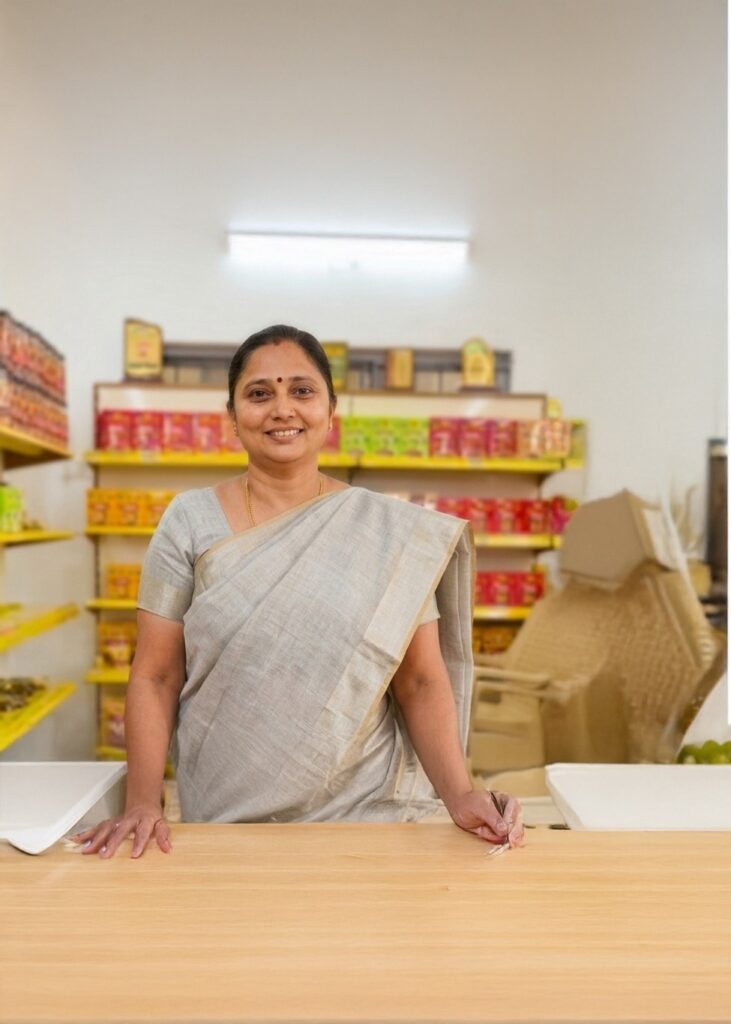
Subhashini runs Millet ‘N’ Minutes in Madurai. She has built a range of 28 millet-based foods, from snacks to ready-to-cook meals, and created work for 14 people, many of them women from her community.
For years, her business was mainly known through local networks and distributors. Reaching customers beyond neighbouring areas was difficult. She had great products but listing them online, setting prices, navigating a digital marketplace, and resolving problems all demanded time and knowledge that a small entrepreneur like her rarely has.
When she received help to join the Open Network for Digital Commerce (ONDC), the distance between her enterprise and new customers began to shrink. Within months, she received more than 5,000 orders from customers across India.
Her story offers a simple lesson: a good product does not become a growing business on its own. The system around the entrepreneur must be able to discover her, trust her, help her transact, and support her as demand grows.
Yet, most livelihood funding still pays for one piece at a time: a training course, a loan, a market linkage, or enrolment in a government scheme. Each intervention may be useful. But a rung is not a ladder.
The problem is not a lack of programmes but a lack of coordination
90% of Indian workers are informal. Many have no salary slips, contracts, or formal records that show what they have learned, earned, built, sold, or repaid. The evidence exists, but it sits in many places: with a training provider, a self-help group, a local NGO, a buyer, a bank, or a government department.
When a worker approaches another institution, that progress often disappears from view.
An employer cannot see what a training partner has observed. A bank cannot use the repayment history held by a Self-Help Group. A marketplace does not know that the entrepreneur has supplied to local retailers reliably for years. The person may progress, but the system cannot record and reward the progress.
This fragmentation also means support arrives out of order. Credit without buyers can leave an entrepreneur with stock they cannot sell. A large order without working capital can leave them unable to deliver. Training without a job, safe transport, or help during the first month of work may never become income.
This is a failure of connection and coordination.
COVID-19 revealed the need to create a ladder
Samhita began in 2009, helping companies and foundations design and deliver social programmes. We became good at reaching more people at lower cost. But most programmes still offered one main service.
COVID-19 showed us how fragile that progress could be. Informal workers and micro-entrepreneurs lost jobs, customers, and income almost overnight. A skill, a loan, or a single market opportunity could not protect a household when the ground shifted.
REVIVE was our response. Launched in 2020 with a wide group of partners, the alliance combined finance, social protection, and capability-building. It reached 716,276 informal workers and micro-entrepreneurs across India, more than 70 percent of them women.
REVIVE proved that institutions could work together around the needs of a person. It also exposed the limits of a time-bound alliance. A collaboration assembled for one crisis ends when the grant cycle and emergency ends. People, however, continue to need new rungs as their lives change.
This raised a harder question: How could coordination continue without Samhita convening every partner and carrying every relationship?
If every decision returns to one organisation, that organisation is not only a catalyst; it may also become the bottleneck. We realised our role had to change – from delivering every answer to helping the wider system connect, learn, and act.
How we are building the ladder for economic mobility
We are now developing two connected pieces.
The Livelihood Acceleration Network brings together the institutions that shape a person’s economic journey: local organisations, employers, lenders, marketplaces, government programmes, funders, and digital systems. It is not one more programme or platform. Its purpose is to help the right opportunity arrive at the right stage.
The Livelihood Account is the memory beneath that network. It is being designed as a participant-controlled, consent-based record of useful livelihood evidence: skills, work experience, enterprise activity, income, repayments, sales, and access to schemes. Instead of asking a person to rebuild their history at every new door, the account would allow them to share the smallest useful set of trusted information for a specific decision.
The distinction matters. An account without institutions prepared to act on it is only a profile. A network without trusted evidence makes every institution start from zero. We need both: proof that can travel and opportunities that can respond.
India’s existing digital public infrastructure makes this more possible than it was a decade ago. Identity, payments, digital documents, consent-based financial data, skilling records, enterprise registration, and open commerce already provide useful building blocks. The task is not to create one giant database. It is to connect relevant information safely, with the person’s permission, to a real decision by a lender, employer, buyer, or government programme.
This is still a work in progress. The Livelihood Account is being prototyped, not presented as a finished national system.
What early evidence suggests
Across selected Samhita livelihood programmes involving 1.08 million participants over 5 years, the strongest results have appeared when several forms of support were combined. In one cohort, women entrepreneurs who received returnable grants alongside business support and market linkages increased their annual incomes by an average of 144%. Farmer cohorts that combined finance, market access, and other support recorded 117% income gains. Job programmes reported placement rates of 84-98% and three-month retention of 77-90% with annual incomes of an average INR 15,000.
These figures vary by programme, cohort, and geography, and they should not be read as proof that any one component caused the outcome. They are signals worth testing more rigorously to check whether a person has been able to reach the next economic milestone.
The invitation
India already has many of the rungs: skills, finance, markets, jobs, schemes, and digital infrastructure. What millions of people do not yet have is a ladder that holds these rungs together to enable irreversible economic mobility.
We are looking for partners who will help build, test, and adopt this approach: local organisations that can design it with participants; philanthropic organisations willing to support building the infrastructure for collaboration; and lenders, employers, marketplaces, and government teams ready to act on trusted proof.
Subhashini should not need a new programme at every stage of her growth. The system itself should recognise what she has built and help her reach what comes next.
That is the ladder we wish to build. Together with you.
 Lessons of Financial Orchestration: What fuels movements towards societal change
  Video
Video