From Doge to MeToo Movement: How ideas go viral
I have a confession to make. Despite my carefully crafted “I am a consumer of niche digital media” exterior, the Doge meme was the first online language I spoke. In fact, I spoke it so well I could synthesise any conversation into the meme format’s six-odd words (how grateful I am for the friends who stuck around).
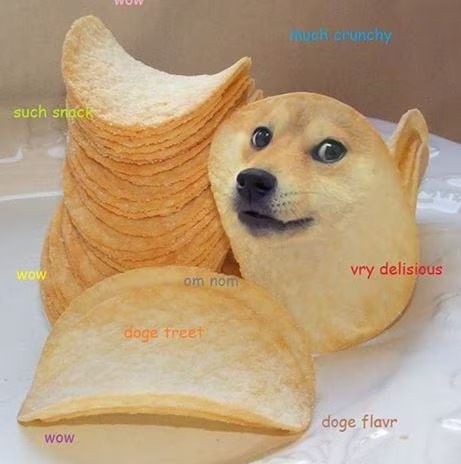
If you have always been cool or simply fortunate enough to bypass the lingua franca of early social media, this is the Doge meme. A Shiba Inu dog, in various scenarios, with bright Comic Sans text.
Unlike its predecessors such as “I CAN HAS CHEEZBURGER?” and “ME GUSTA” “Y U NO?”, Doge was (and still is) infinitely versatile. This is because its one central image and remixable linguistic structure (very X, much Y, such Z and so on) make it easy for anyone to create a version of the meme as they please. From Christmas cards and tech commentary to becoming an open-source peer-to-peer cryptocurrency called Dogecoin, the Doge meme has travelled across all corners of the Internet.


I may sound far more passionate about the Doge meme than embarrassed. Believe me, I am wallowing in the cringe of the time when all my sentences started with “much” and “such”. However, as I look back, it wasn’t all in vain. Looking back, Doge taught me the travelling potential of an idea, or a “unit of culture” as Richard Dawkins defines a meme. As I research exponential change today, I am taking inspiration from memes to think deeply about how an idea spreads. How it becomes a container for a shared experience or even a shared language. How it gathers contextual nuance with usage. How it gets adapted and spreads far and wide, thus stitching together spaces, experiences and communities that otherwise would not be in conversation with one another. Sounds a lot like social movements, doesn’t it?
Take #MeToo for example. Two simple words became the conductor of an experience spanning geography, ethnicity and socio-economic location. #MeToo became the common ground on which people across the globe came together against gender-based violence they had faced or witnessed. #MeToo travelled so quickly and widely because, like memes, it offered adaptability with a connecting fibre. As people shared their stories, they gave others the strength to speak up and take a stand. These stories struck a chord with so many, spreading across communities and institutions, bringing to the surface what had been silenced and buried. Like memes, every adaptation, every local action enriched #MeToo, expanding its scope beyond speaking without stigma to solidarity and eventually, a call to systemic change. While the translation of #MeToo to policy and legal frameworks as well as behaviour change has been uneven, it solidified the narrative around reimagining a safe and equitable world. We cannot go back to a pre-#MeToo era.
Though memes and social movements are different universes, they are powered by the same engine – exponential change. And, if memes and movements can take off in similar ways, spreading from person to person, place to place, it’s worth asking: What makes an idea spark exponential change?
As I look closely, a few patterns emerge:
- Simple yet compelling: These ideas are easy to understand and evoke strong emotion in people. They express a feeling or trigger an action that enables people to repeat and / or share it forward.
- Easy to adapt and build upon: These ideas invite more people to remix and make it their own. These ideas are not limited to a particular context, but rather, gain momentum with diversity.
- Travel networks to network: These ideas spread through connections – between and across communities, digital spaces, workplaces and even families. Everybody who engages with the idea isn’t just a recipient but a participant – capable of adding to and sharing the idea.
While the days of Doge are behind us, can we draw inspiration from the way memes spread far and wide to spark ideas that everyone can make their own? Can we enable conditions for everyone to engage, create and share? Can we ensure such ideas live on and take root, without us at the centre?
Curious about whether societal change can be exponential? Read more.
 What’s Really Changing?
 Video
Video